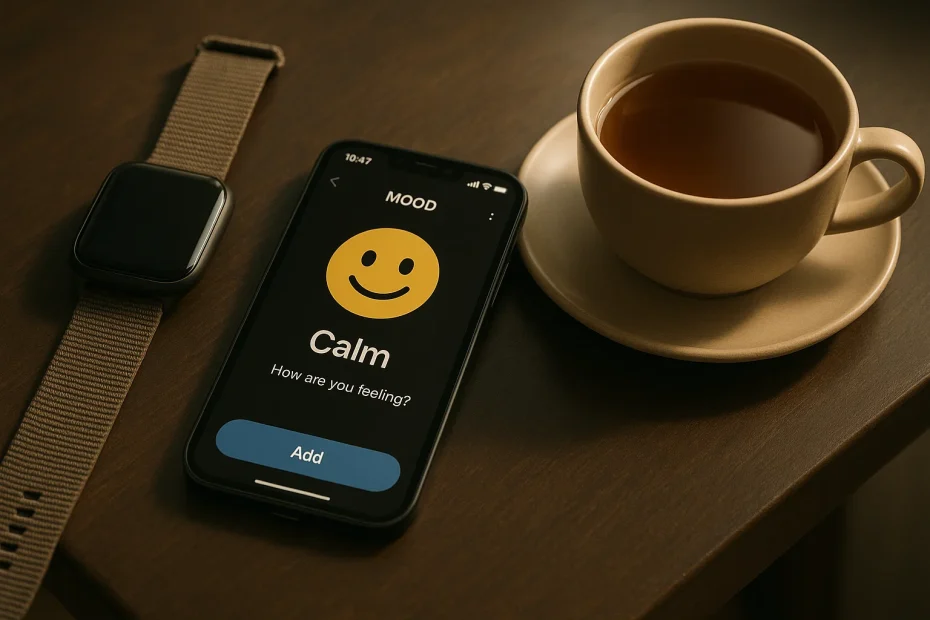
Taking care of your health — both physical and mental — gets a little easier when you have the right tools. That’s where AI-driven activity and mood tracking comes in. These tools don’t just count your steps or log your sleep. They look for patterns, offer insights, and can even help you understand your emotional ups and downs over time.
AI-powered tracking apps help improve health and well-being by analyzing your daily habits and offering personalized, helpful insights.
What is AI-driven health and mood tracking?
In plain terms, it’s using smart tools to keep an eye on how you move, sleep, and feel. These tools learn from your behavior and spot trends you might not notice — like how a restless night affects your energy, or how a walk in the morning lifts your mood.
Many apps work quietly in the background. You just go about your day, and they do the heavy lifting: watching for changes, tracking habits, and offering simple suggestions you can actually use.
- Track steps, heart rate, and sleep patterns
- Log your mood with a few taps or voice commands
- Receive personalized advice based on your history
- Set gentle reminders for movement or mindfulness
How does AI make health tracking more useful?
Without AI, health trackers often just show numbers. But AI connects the dots. It might notice that you tend to feel low on rainy days or that your sleep improves when you take a walk before dinner. These patterns can feel obvious once you see them — but most of us wouldn’t think to look for them in the first place.
This is where AI shines. It’s not just collecting data — it’s analyzing it for patterns that help you make small, meaningful changes.
Want to explore more about this growing space? Visit our full guide on AI in Health and Medicine.
Are these tools helpful for older adults?
Yes — and in many cases, they’re designed with seniors in mind. Many tools have large fonts, voice controls, and simple dashboards. And even if you’re not a “techy” person, they often require just a few taps a day or less.
Some devices even offer companionship-style features, like gentle encouragement, or mood check-ins that feel more like a conversation than a form to fill out.
How do I choose the right tool for me?
Not all tools are created equal. Some are focused on fitness. Others are more mental health–oriented. Some are free. Some offer premium versions. Here’s what to look for:
- Is it easy to use?
- Does it track what matters to you (e.g., sleep, mood, movement)?
- Can you understand the insights it gives you?
- Is your data private and secure?
Some well-known names in this space include Fitbit, Apple Health, Moodfit, and Wysa — but there are many to explore.
If you want a glimpse at the future of health tech, this article on AI for Health gives a great overview.
Frequently Asked Questions
Do I need a smartwatch to use these tools?
No — many apps work right from your phone. Smartwatches can help, but they aren’t required.
Are mood tracking apps safe to use?
Generally, yes — just make sure the app is reputable and check its privacy policy before sharing personal information.
What’s the difference between a regular health app and one with AI?
AI-powered apps offer insights and predictions, while regular ones mostly collect and display data without deeper analysis.
Your Quick-Start Checklist
- Pick one app that tracks either activity or mood (not both to start)
- Use it daily for at least one week
- Check the insights it provides — do they feel useful?
- Try adding another feature: mood logging, step goals, or sleep tracking
- Review your trends after a month and reflect on what you’ve learned
Conclusion
Health isn’t just about fixing problems — it’s about noticing what helps you feel good, day by day. AI-powered tools are like having a quiet, supportive coach in your pocket. They won’t nag or judge. They’ll simply show you what you might not have noticed.
Try one this week. You might discover something surprisingly helpful about yourself.