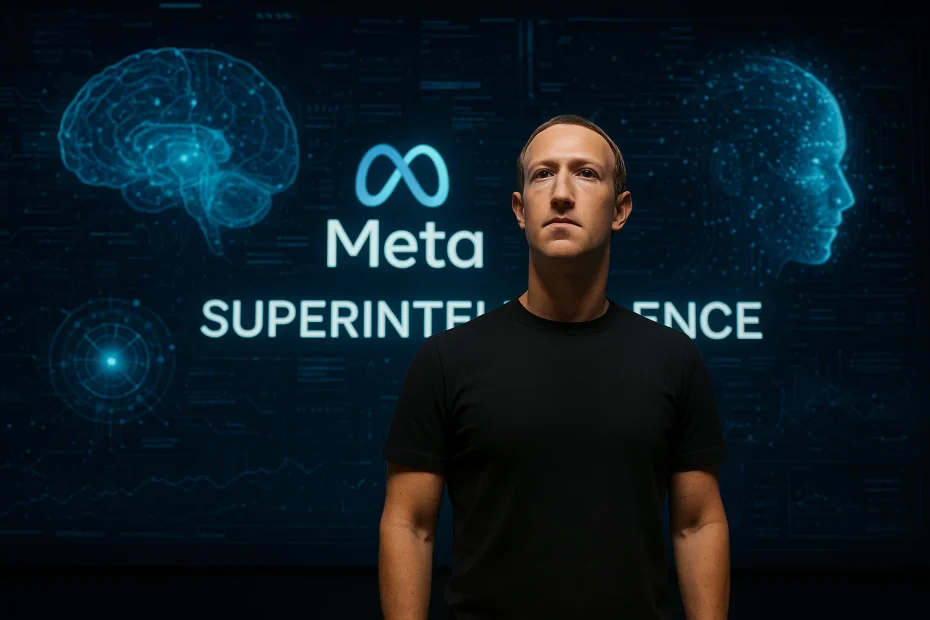
You may have seen headlines about Mark Zuckerberg and “superintelligence” lately. If it sounds like science fiction, you’re not alone. But here’s the thing — Meta’s Superintelligence Labs aren’t just a tech story. They could shape how artificial intelligence evolves in ways that touch everyday life — including yours.
Meta’s new superintelligence team matters because it may speed up AI development in ways that affect jobs, safety, privacy, and global stability.
What is superintelligence, and why is Meta chasing it?
Superintelligence refers to an AI system that could think and reason far beyond human ability. It’s not here yet — but companies like Meta want to be first. Zuckerberg recently formed a team focused entirely on building this kind of AI.
And it’s not just any team. They’ve hired top talent away from OpenAI, Google DeepMind, and Anthropic — some of the world’s most advanced AI groups [Zuckerburg’s Superintelligence Team].
How does this affect regular people?
More competition at the highest levels of AI can lead to faster progress — but also more risk. When tech companies race to be first, they may take shortcuts or push boundaries before the world is ready.
- AI could reshape work, healthcare, education, and communication
- Advanced systems might make decisions too complex for humans to fully understand
- Without proper oversight, powerful AI could be misused
In short, superintelligence might not show up at your door — but its ripple effects could land in your mailbox, your doctor’s office, or even your local community center.
Is this good or bad for AI progress?
It depends. Healthy competition can drive innovation and create tools that improve lives. But it also raises big questions about control, fairness, and safety — especially if powerful tools are rushed out without enough testing.
That’s why conversations about ethics, safety, and shared responsibility are more important than ever. If you’re new to these ideas, take a look at AI Ethics Made Simple.
What happens next?
Meta isn’t alone. Other major players like Microsoft, Google, and even nation-states are exploring similar goals. What matters now is how open they are about what they’re building — and how much input the public gets along the way.
Frequently Asked Questions
Does superintelligence exist yet?
No — it’s still a theoretical goal. But companies are racing to build systems that could lead to it.
Should I be worried about Meta's AI plans?
Not necessarily, but it’s wise to stay informed. These developments could shape the future in both helpful and risky ways.
Can regular people influence AI development?
Yes — by learning, asking questions, voting thoughtfully, and supporting responsible innovation, your voice matters more than you think.
Your Quick-Start Checklist
- Read a simple article about superintelligence (like this one!)
- Ask an AI tool what superintelligence means — and have it explain it again if needed
- Bookmark trusted sources to follow AI news calmly
- Talk to a friend or family member about what you’ve learned
- Stay curious — the future will reward those who are engaged, not just “tech-savvy”
Conclusion
AI is changing fast — and so are the people building it. Whether these changes lead to brilliant tools or messy consequences depends on how thoughtfully we all engage with them.
Keep asking questions. Keep learning. The future belongs to those who stay calmly curious.