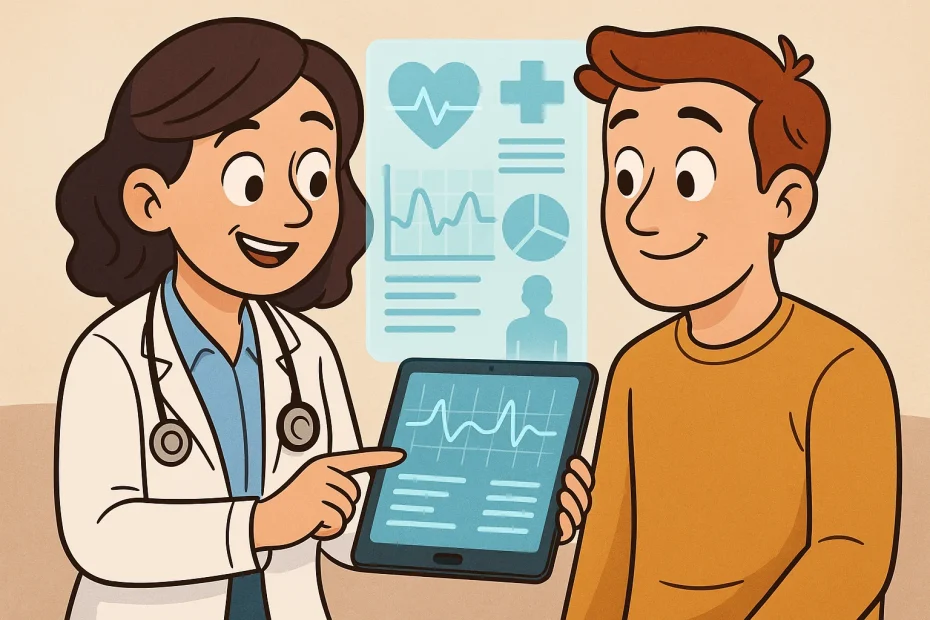
AI in health and medicine is one of those rare spaces where the stakes are high—but the potential? Even higher. We're talking about technology that could help doctors detect diseases earlier, tailor treatments more precisely, and ease the burnout that's overwhelming healthcare professionals. And while it might sound complicated, the truth is: the core ideas are simpler than you'd think. So let’s unpack it all, step by step.
What AI Is (and What It Isn’t)
At its core, artificial intelligence is just software that learns from patterns. Think of it like a really attentive student who’s read millions of patient records and can now spot certain warning signs faster than a human ever could. But here’s the key—it doesn’t "know" things the way people do. It learns by example, and those examples matter a lot.
The Image Detective
One place AI shines is in medical imaging. For example, some AI systems can scan mammograms or MRIs and flag abnormalities that doctors might miss. It’s like giving a radiologist a second pair of super-sharp eyes. But don’t worry—doctors are still in charge. AI offers support, not replacement.
Personalized Medicine: Tailoring Care to You
If you’ve ever tried on a shirt labeled “one size fits all,” you know how poorly that usually goes. Healthcare can be the same. What works for one person might not work for another. That’s where AI comes in—helping doctors consider your unique history, lifestyle, and even your genes.
- AI can suggest medication dosages tailored to your body.
- It can flag risk factors based on your data, even ones doctors might overlook.
- It can help predict how you might respond to different treatments.
This kind of precision care isn’t a fantasy—it’s already happening in some hospitals and research labs today.
Building Trust: The Human Side of Tech
Let’s be real—if a machine is going to weigh in on your health, you probably want to know how it’s making decisions. That’s where trust comes in. AI has to be transparent, and we need to stay curious about how it works and how it’s used.
If you've ever wondered Is AI Dangerous?, you're not alone. It’s a fair question. What matters is building systems with care, involving human oversight, and constantly testing to make sure they're safe, fair, and working as intended.
Limitations and Learning Curves
AI has its blind spots. It learns from data, and if that data is flawed, the AI can be too. For instance, if it’s trained mostly on data from one group of people, it may not perform well for others. It’s a reminder that AI isn’t magic—it’s a tool, and like any tool, it’s only as good as the hands that shape it.
That’s why some of the most important work in AI today isn’t flashy—it’s thoughtful. Developers and doctors are working together to make sure AI works for everyone, not just a few.
The Future: Data-Driven, But Still Deeply Human
When we look ahead, AI in Healthcare won’t just be about data—it’ll be about care. That means using AI to give doctors more time with patients, not less. It means designing tools that make things easier for everyone involved, from nurses to family caregivers.
At its best, AI should help us be more human—not less.
So here’s a thought to carry with you: What if the future of medicine wasn’t just about faster results, but about deeper connection? That’s a future worth exploring.