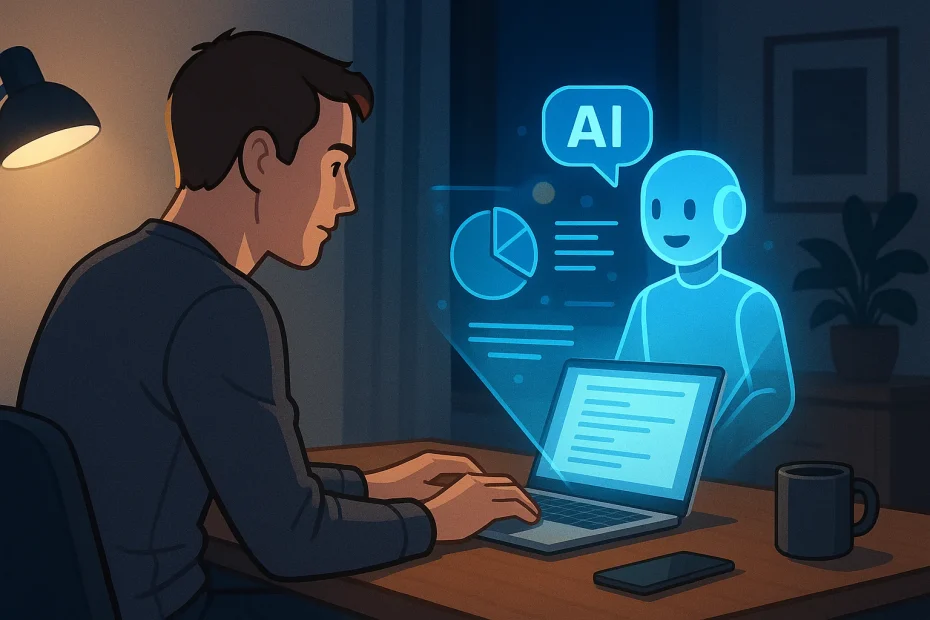
AI is changing jobs. That’s not a warning—it’s just the reality. But if the phrase “future of AI jobs” brings up images of robots replacing everyone overnight, take a breath. What’s really happening is more nuanced—and more human—than that.
Yes, AI will reshape the job landscape. But for most people, especially in the short term, it’ll change how you work long before it changes whether you work. Let’s unpack what that actually means, and where we might be headed next.
How AI Is Already Affecting Jobs
AI is creeping into more parts of everyday work life—often without a big announcement. Think of tools like Grammarly helping write emails, or Excel suggesting formulas. These are small automations, but they quietly make a difference.
Here’s what’s happening across many industries:
- Repetitive tasks are being automated—things like data entry, scheduling, or document sorting
- Customer service is shifting with chatbots handling the first line of communication
- Creative work is evolving, with AI helping generate ideas or first drafts
These changes are subtle, but they’re already reshaping what a “normal workday” looks like.
Job Displacement vs. Job Transformation
Let’s be clear: some jobs will go away. That’s always been true with new technology (remember switchboard operators?). But the bigger story is job transformation—where roles shift instead of disappear.
For example, someone working in customer support might now manage chatbot systems or step in for more complex human problems. A marketing assistant might use AI to draft social posts but still need to refine and publish them.
Instead of seeing AI as competition, it helps to see it as a powerful tool—one that can make your work more efficient and, in some cases, more enjoyable.
What About AGI?
AGI, or Artificial General Intelligence, refers to AI that can perform any intellectual task a human can do. It’s not here yet—but it might be closer than many people think.
When AGI arrives (and no one agrees exactly when that will be), it could disrupt things on a totally different scale. This isn’t just about speeding up spreadsheets—it’s about AI systems reasoning, planning, and even making decisions independently.
It’s okay to feel uncertain about that. We’re in uncharted waters. But even here, there’s room for hope. AGI doesn’t have to replace us—it could also be designed to support us in ways we’ve never experienced before. That’s why public awareness, thoughtful design, and ethical discussion are so important right now.
How to Future-Proof Yourself
No one can predict the future perfectly, but there are a few smart steps you can take today to prepare for the world AI is shaping.
- Learn the basics of AI tools—even just understanding what’s out there helps you stay ahead (we’ve got a guide for that)
- Focus on human strengths like creativity, empathy, and adaptability—these are harder to automate
- Be open to learning new skills, even small ones, as roles evolve
- Follow trusted sources to stay in the loop on AI news and policy changes
Change is always a little uncomfortable. But being curious, instead of fearful, is one of the best ways to meet it.
The Human Side of the Future
The future of AI jobs isn’t written in stone. It’s being written right now—by people, communities, and choices we make together.
If you’ve felt overwhelmed by all the headlines or predictions, that’s okay. It’s a big shift. But you’re not powerless. In fact, staying grounded, informed, and open might be exactly what this future needs most.
AI isn’t just about what jobs it changes—it’s about how we change with it. And that’s something we can walk through together. If you want to read more about the future of AI jobs, check out this page.